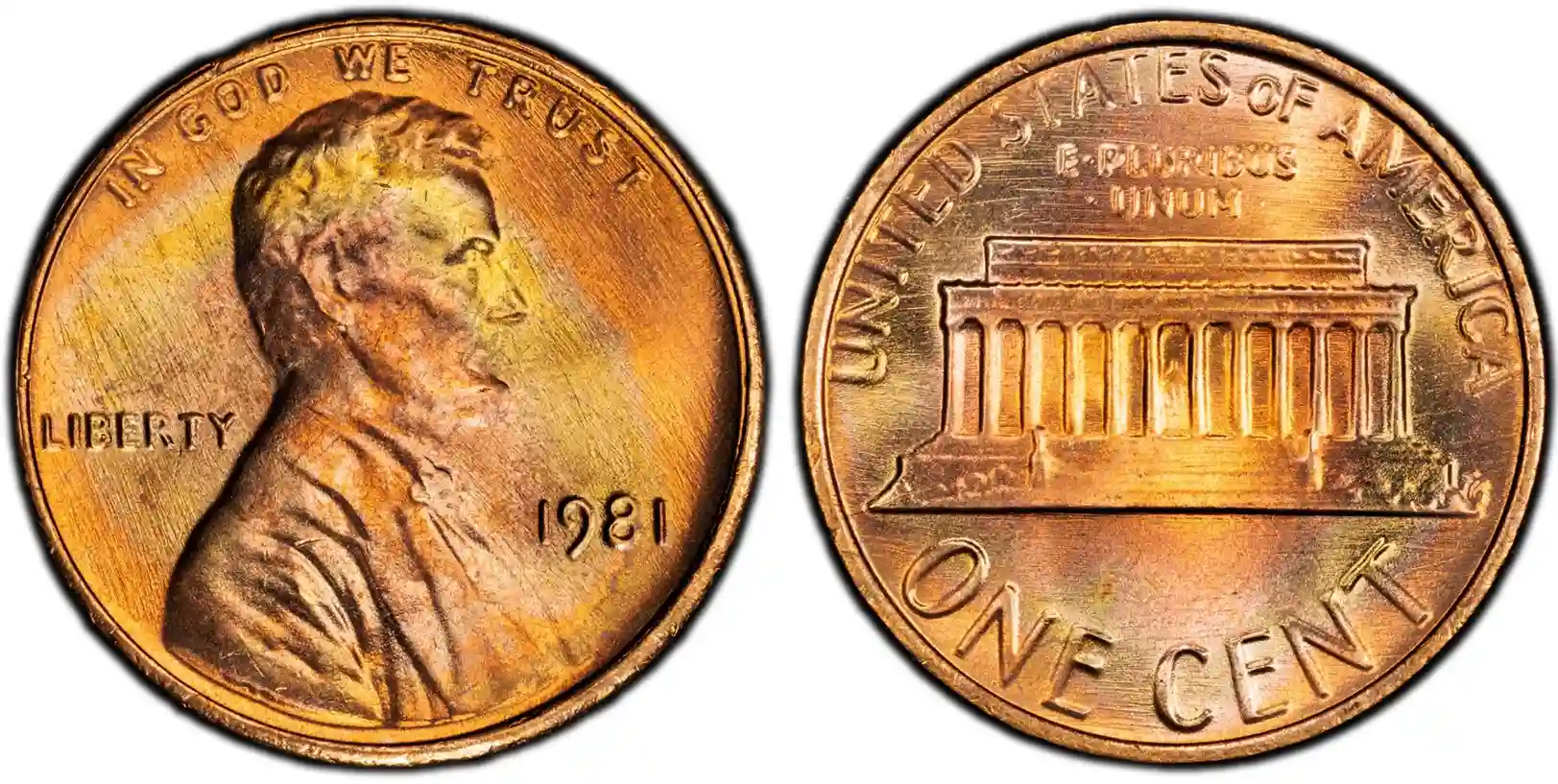
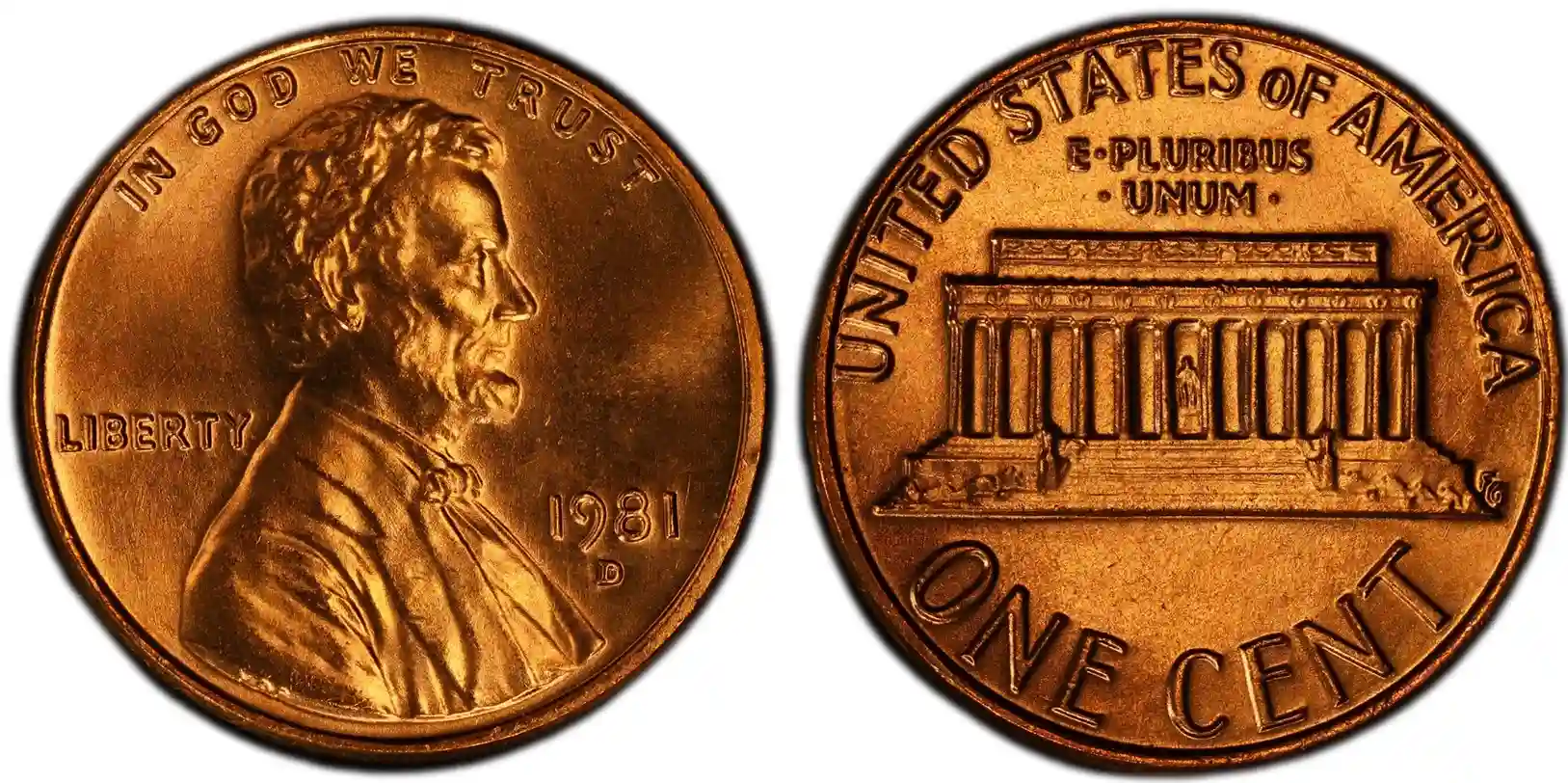
Real 1981 copper pennies have a basic metal 1981 penny value between $0.02 and $0.03. Nice uncirculated collector pennies sell for prices from $1 to $15. Rare high grade specimens in perfect condition auction for prices between $500 and $3000.
| Feature | Regular Strike Value |
| Face value | $0.01 |
| Total weight | 3.11 grams |
| Metal mix | 95% copper and 5% zinc |
| Edge type | Plain |
| Disc diameter | 19.00 millimeters |
Copper prices rose less than 18% over the last three years, so raw metal value stays between $0.02 and $0.03.
Value by Mint Mark and Grade
| Coin Type and Mint Mark | Grade 63 Price | Grade 65 Price | Grade 67 Price | Grade 68 Price | Record Price |
| 1981 No Mint Mark Brown | $0.15 | $0.50 | $5 | $25 | $110 |
| 1981 No Mint Mark Red | $1 | $5 | $45 | $320 | $3000 |
| 1981-D Brown | $0.15 | $0.50 | $4 | $20 | $95 |
| 1981-D Red | $1 | $4 | $35 | $280 | $8156 |
| 1981-S Proof Type 1 Red | $2 | $5 | $12 | $35 | $260 |
| 1981-S Proof Type 2 Red | $15 | $40 | $95 | $190 | $12150 |
Wide price gaps between different grades exist due to coin surface damage. Most pennies found in old jars have heavy wear.
How to Grade Your Penny
Coin grading determines the final cash worth. Expert graders use the seventy-point Sheldon scale to evaluate coins. You can examine your pennies using simple grading rules.
Proof
Mirror fields contrast with frosty frosted details. Special mint machines made these items for collector sets. You will not find any hairline scratches on these specimens.
Mint State 67
These coins display full original coin luster without dark carbon spots. Only three tiny contact marks from transit bags are allowed on the surface. Hair lines on the Lincoln portrait look sharp under magnification.
Mint State 65
Strong original coin shine covers both sides of the coin. Small hairline marks appear only on the largest design parts. Wear from circulation is completely absent.
Mint State 63
Original metal shine looks slightly dull or uneven. Several small carbon spots appear on the coin fields. General eye appeal remains attractive for average coin collections.
About Uncirculated
Light friction marks appear on the highest design peaks. Lincoln hair details above the ear look slightly flat. More than half of the coin surface keeps its original shine.
Extremely Fine
Coin design outlines remain sharp despite losing fine details. Original coin luster disappears completely from the fields. Circulation wear is visible on both sides without coin-identifier.com.
Very Fine
Heavy commercial use flattens most design details. Legend letters remain easy to read despite overall coin wear. These worn pennies sell mainly for their metal value.
Color Classification
Copper metal reacts with air over time. Coin experts use three color terms to describe this reaction.
These terms are:
- Red RD
- Red-Brown RB
- Brown BN
Red pennies keep 90% or more original orange-red copper color. Red-Brown coins have a mix of red and brown spots. Brown pennies are completely dark from air contact.
The price difference between Red and Brown colors for Grade 67 coins is over 800%.
| Coin Type | Brown Price | Red-Brown Price | Red Price |
| 1981 No Mint Mark | $5 | $15 | $45 |
| 1981-D | $4 | $12 | $35 |
Mint Locations and Varieties
Three mint locations produced these small pennies. Every location has special mark details on the coin surface.
Philadelphia with No Mint Mark
Philadelphia workers struck the largest share of the mintage, making 7491750000 coins. These pennies have no small letter under the date. Standard specimens in Grade 67 Red sell for $40 to $60. Grade 68 Red specimens auction for $300.
Denver with D Mint Mark
Denver workers produced 5373235677 coins with a small letter D under the date. Production quality at this location was usually very high. Nice Grade 67 Red specimens sell for $30 to $50. The record price for this mint mark is $8156 for an amazing Grade 67 plus Red coin.
San Francisco with S Mint Mark
San Francisco workers produced 4063083 collector proof coins. Two different mint mark styles exist for this year. Type 1 shows a small, filled, or blobby letter S. Type 2 shows a clear, well-formed letter S with round parts.
Type 1 proofs in perfect Grade 69 Deep Cameo sell for only $15. Rare Type 2 proofs in the same condition start at $180. The record price for a Type 2 proof in perfect Grade 70 Deep Cameo is $12150.
Mint Errors
Defective coin presses create rare pennies with high values. These mechanical mistakes turn standard pennies into expensive treasures.
Double Die Obverse
This mistake happens when a defective die strikes the coin twice. Bold doubling appears on the letters of the motto and the date digits.
- Grade 63 price: $50
- Grade 65 price: $250
- Record price: $700
- Discovery rate: Very low
Off-Center Strike
Defective feeding systems place the copper blank incorrectly in the coin press. Part of the metal remains blank without any design. Error value depends on the percentage of the offset and date visibility.
- 10% offset price: $5
- 50% offset price: $60
- 70% offset price: $110
- Date presence: Required
Broadstruck
This error occurs when the press strikes a coin blank without its protective metal collar. The copper metal spreads outward past the normal diameter. Coin edges look flat and thin.
- Grade 63 price: $25
- Grade 65 price: $75
- Edge style: Plain
- Coin shape: Distorted
Repunched Mint Mark
Mint employees punched the letter D into the steel die twice. Double letter lines are visible on Denver coins.
- Grade 63 price: $8
- Grade 65 price: $35
- Offset direction: West
- Find rate: Medium
Double Strike
The coin press strikes a single blank two times before ejecting it. Two overlapping Lincoln portraits appear on the metal.
- Average price: $550
- Offset presence: Yes
- Error popularity: High
- Rarity level: Extreme
Reasons for Coin Value Loss
Poor coin care destroys extra value quickly. Even rare pennies can lose all collector worth.
Chemical Cleaning
Using household chemicals to clean dark pennies ruins the original luster. Acid liquids melt the top copper layer, leaving tiny holes on the surface. Cleaned coins receive a details grade from grading companies, dropping the price by 99%. A real example shows a nice 1981-D Grade 67 Red penny losing value from $250 to $2 after baking soda cleaning.
Mechanical Damage
Wiping copper coins with rough cloth leaves fine scratches. Scratched coin surfaces cannot get grades above Grade 60. Buyers ignore scratched copper pennies completely. Smart collectors hold pennies only by the thin edges.
Plastic Damage
Storing coins in cheap soft plastic pages causes green damage. Plastic chemicals react with copper, making a green sticky film. This green film eats the metal surface, creating deep pits. Acid-free hard plastic capsules protect coins safely.
Investor Tips
Smart buyers follow basic rules to protect their cash. Avoid raw pennies from unknown online sellers. Verify coin weights on digital scales to avoid fake items. Buy only graded coins in plastic holders. Monitor auction prices regularly to buy items at fair rates. Focus on coins in Grade 66 Red and higher. These high grade coins offer the best profit.
- Buy certified coins
- Verify coin weights
- Monitor auction sales
- Focus on high grades